
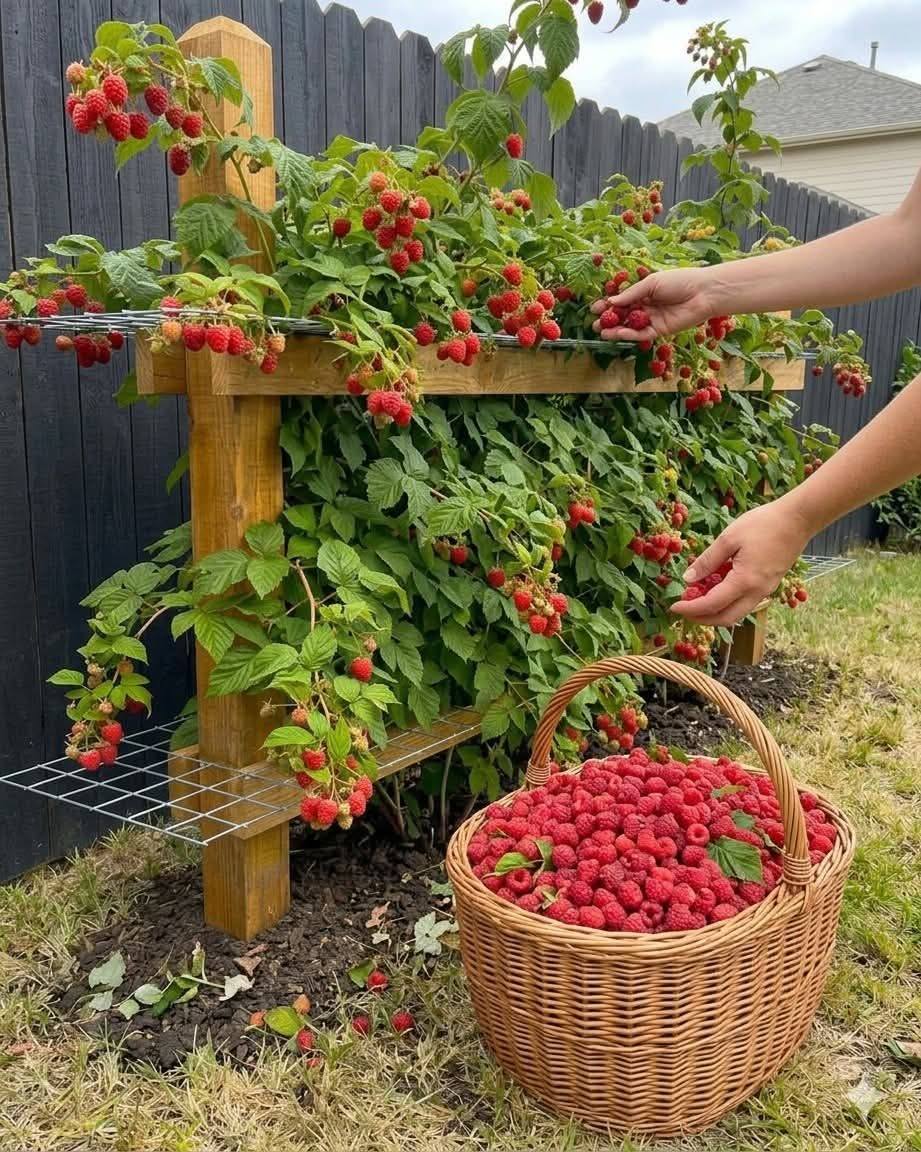
7. Keep Soil Moist with Deep, Even Watering
10 Proven Tips Help Gardeners Harvest Buckets of Raspberries
Raspberries have shallow root systems that are very sensitive to drying out, especially during flowering and fruiting.
Instead of watering lightly and often, give them a slow, deep drink once or twice a week. Aim for about one and a half inches of water weekly, more during hot, dry spells.
Drip irrigation or a soaker hose is ideal. You should water at the base in the morning, avoid wetting the leaves, and add mulch to help hold in moisture.
8. Pick Raspberries Often
Raspberries ripen fast, sometimes almost overnight during peak season. To keep your plants producing, pick every day or two when berries are coming in heavily.
Ripe berries come off with barely a touch. If you have to tug, they’re not ready.
Don’t let overripe fruit sit on the plant too long. It attracts insects, encourages mold, and slows new fruit production.
Also, you use shallow baskets or trays when harvesting so the berries don’t crush each other, especially if you’re picking several pounds at a time.
9. Add Aged Manure in Fall for Next Year’s Growth
After the harvest ends, your raspberries are already planning next year’s growth. Help them out by feeding the soil with aged manure.
Cow, horse, or chicken manure that’s been composted for at least 6-12 months works best.
You spread a one- to two-inch layer across your beds in late fall, and top with straw to protect it from washing away in rain or snow.
Specially, remember to skip fresh manure as it’s too strong and can burn roots. By spring, your plants will be ready to explode with growth.
10. Rejuvenate Old Patches Every Few Years
10 Proven Tips Help Gardeners Harvest Buckets of Raspberries
Even the best-kept raspberry patches can start to tire out after 4-5 years.
Canes may get thinner, yields drop, and disease pressure increases. That’s your sign it’s time to refresh the bed.
In early spring, dig up a section of your patch and divide the healthy runners. Replant them into a new area with rich, clean soil, and discard old, woody roots.
Giving your plants a fresh space every few years helps maintain high yields and reduces pest and disease buildup in the soil.
ADVERTISEMENT
