
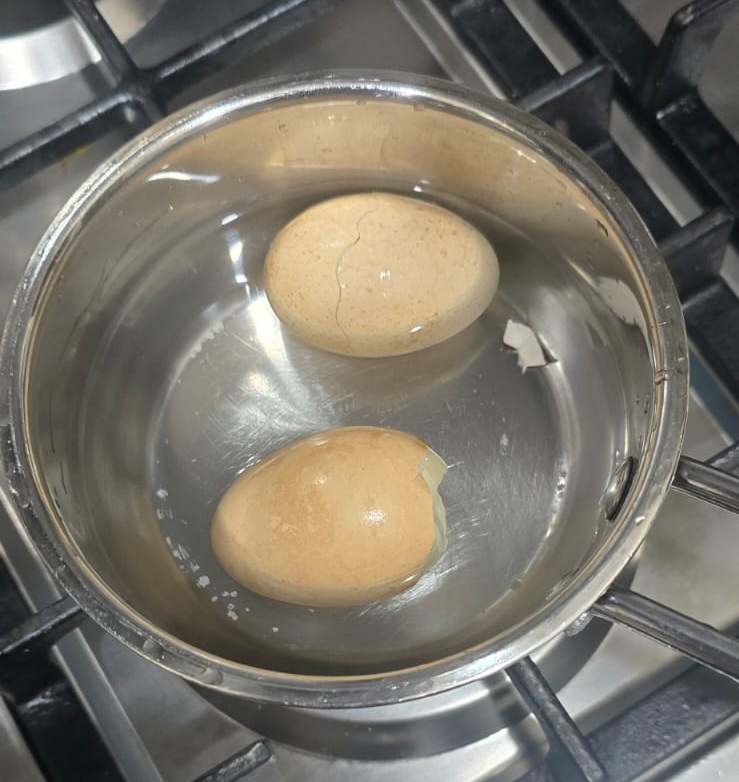
One of the most common problems when reheating boiled eggs is the possibility of them exploding, especially in the microwave.
When a whole boiled egg is heated in the microwave, steam can build up rapidly inside the egg. This pressure may cause the egg to suddenly explode.
The explosion may occur:
Inside the microwave
Or even after removing the egg and cutting into it
For this reason, experts recommend not heating whole boiled eggs in the microwave without cutting them first.
4. Risk of Bacterial Growth
Another important factor in food safety is how the boiled eggs are stored.
If boiled eggs are left at room temperature for too long, bacteria may begin to grow.
One of the most well-known bacteria associated with eggs is:
Salmonella
If eggs are not stored properly, reheating them later may not eliminate all harmful bacteria. That is why boiled eggs should always be refrigerated shortly after cooking.
Does Reheating Boiled Eggs Make Them Toxic?
There is a common myth on the internet claiming that reheating boiled eggs makes them toxic.
In reality, there is no strong scientific evidence proving that reheating boiled eggs makes them poisonous.
Most problems associated with reheated eggs are related to:
Improper storage
Leaving eggs out too long
Unsafe reheating methods
Therefore, boiled eggs are generally safe to reheat if they have been stored properly.
How Long Do Boiled Eggs Last in the Refrigerator?
When stored correctly in the refrigerator, boiled eggs typically remain safe to eat for about:
5 to 7 days.
However, it’s important to follow these guidelines:
Store eggs in a closed container
Refrigerate them soon after they cool
Avoid leaving them at room temperature for long periods
The Best Ways to Reheat Boiled Eggs
If you prefer eating boiled eggs warm, there are safer methods to reheat them.
1. Reheating in Hot Water
This is considered the safest and most effective method.
Steps:
Heat water until it is hot (not boiling).
Place the boiled eggs in the hot water.
Leave them for about 5–10 minutes.
This allows the eggs to warm up gently without direct high heat.
2. Cutting the Egg Before Microwaving
If you plan to use a microwave, it’s best to:
Cut the egg in half
Or slice it into smaller pieces
This helps prevent pressure buildup inside the egg.
3. Adding Eggs to Hot Dishes
read more on next page
ADVERTISEMENT
