
Step 1: Warm the milk gently
Pour the milk into a small saucepan and heat it over medium-low just until it begins to steam. You’re not boiling it; you only want it hot enough that you can see wisps of steam and tiny bubbles forming around the edges.
Remove from the heat and let it sit for a minute. This step helps the custard cook evenly later.
Step 2: Whisk the eggs and sugar
In a mixing bowl, whisk together the eggs, sugar, salt, and vanilla until the mixture is completely smooth. Avoid whipping in too much air; you want a unified liquid, not foam.
Step 3: Temper the eggs
This is the key fail-proof move.
Slowly pour the warm milk into the egg mixture while whisking constantly. Start with just a small splash of milk, whisk it in, then continue adding the rest in a thin stream.
Tempering raises the temperature of the eggs gradually so they don’t scramble.
Step 4: Strain for silkiness
Pour the custard mixture through a fine mesh strainer into a measuring jug or bowl. This catches any tiny bits of cooked egg and guarantees a smooth texture.
Step 5: Prepare the water bath
Preheat your oven to 325°F (160°C).
Place your ramekins or baking dish into a larger, deep baking pan. Pour the custard into the ramekins, filling them almost to the top.
Sprinkle a tiny pinch of nutmeg or cinnamon on each if you like.
Carefully pour hot water into the outer pan until it comes about halfway up the sides of the ramekins. This water bath insulates the custard from direct oven heat.
Step 6: Bake slowly
Transfer the whole setup to the oven.
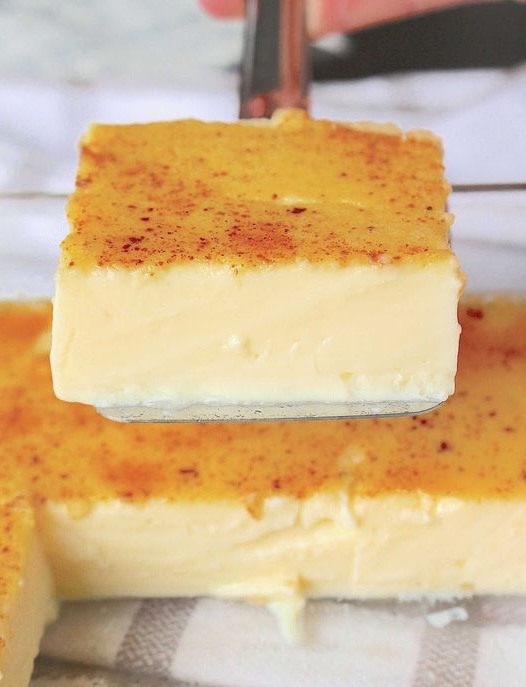
Bake for about 35–45 minutes for small ramekins, or 50–60 minutes for one larger dish. The custard is done when the edges are set but the center still jiggles slightly when gently shaken.
If you insert a knife near the center, it should come out mostly clean but a little moist.
Step 7: Cool gradually
Remove the ramekins from the water bath and place them on a rack to cool to room temperature. Then refrigerate for at least 2 hours.
Cooling slowly helps the custard finish setting without becoming rubbery.
How to serve
For Complete Cooking STEPS Please Head On Over To Next Page Or Open button (>) and don’t forget to SHARE with your Facebook friends
ADVERTISEMENT
