
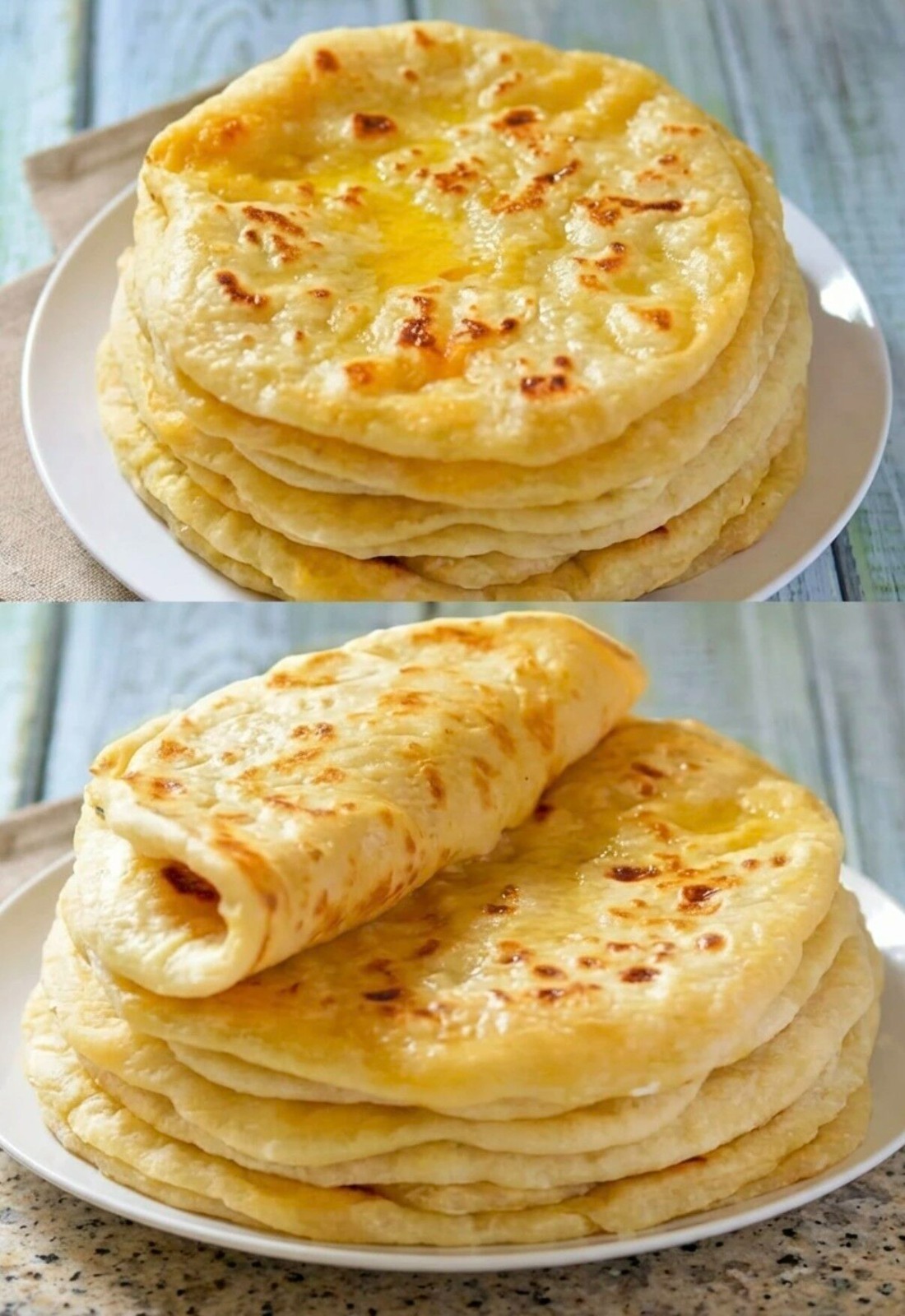
What to Serve It With
Olive oil and za’atar – Classic Middle Eastern breakfast
Hummus, baba ganoush, or tzatziki – The perfect dipper
Grilled meats and kebabs – Essential for sopping up juices
Soups and stews – Tear and dip into lentil soup or stews
Cheese and olives – A simple, satisfying meal
Butter and honey – For a sweet breakfast treat
Storage and Reheating
Room Temperature:
Store in an airtight container or wrapped in foil for up to 2 days. The texture softens but remains delicious.
Freezer:
Wrap cooled breads tightly in plastic wrap, then foil. Freeze for up to 3 months. Thaw at room temperature.
Reheating:
Oven: 350°F for 5-8 minutes, wrapped in foil.
Skillet: Warm in a dry skillet over medium heat for 1-2 minutes per side.
Not recommended: Microwave (makes them tough).
Your Turkish Bread Questions, Answered
Can I make this without a stand mixer?
Absolutely! Knead by hand—it’s great exercise and only takes 8-10 minutes.
Can I use bread flour instead of all-purpose?
Yes! Bread flour will give even more structure and chew.
My bread didn’t puff. What went wrong?
Either the oven wasn’t hot enough, the dough was over-proofed, or it was rolled too thin. Next time, crank the heat and check your timing.
Can I cook these in a skillet like traditional bazlama?
Yes! Traditional bazlama is often cooked in a dry skillet or griddle. Cook over medium-high heat for 2-3 minutes per side until puffed and golden.
Can I double this recipe?
Yes! Make a double batch and freeze half.
What’s the difference between bazlama and pide?
Bazlama is a thick, round, flatbread often cooked on a griddle. Pide is typically an oval, boat-shaped bread that can be topped or stuffed. This recipe works for both.
ADVERTISEMENT
