
1. 🍷 White Vinegar – Nature’s Burner
White vinegar contains acetic acid , which dries out plants by pulling moisture from their leaves and disrupting cell membranes.
Household vinegar is around 5% acetic acid — strong enough to kill young weeds.
For tougher, mature weeds, you can go stronger with horticultural vinegar (20%) , available at garden stores.
2. 🧂 Salt – The Dehydrator
Salt helps vinegar work even better by pulling moisture from the soil — creating an environment weeds don’t want to live in.
But be careful — salt can linger in soil , making it hard for anything else to grow there.
Use sparingly on driveways, patios, or walkways — not in your garden beds if you plan to plant something later.
3. 🧼 Dish Soap – The Sticker
A few drops of liquid dish soap helps the mixture stick to leaf surfaces , giving the vinegar and salt more time to work.
Think of it as the glue that keeps the burn going .
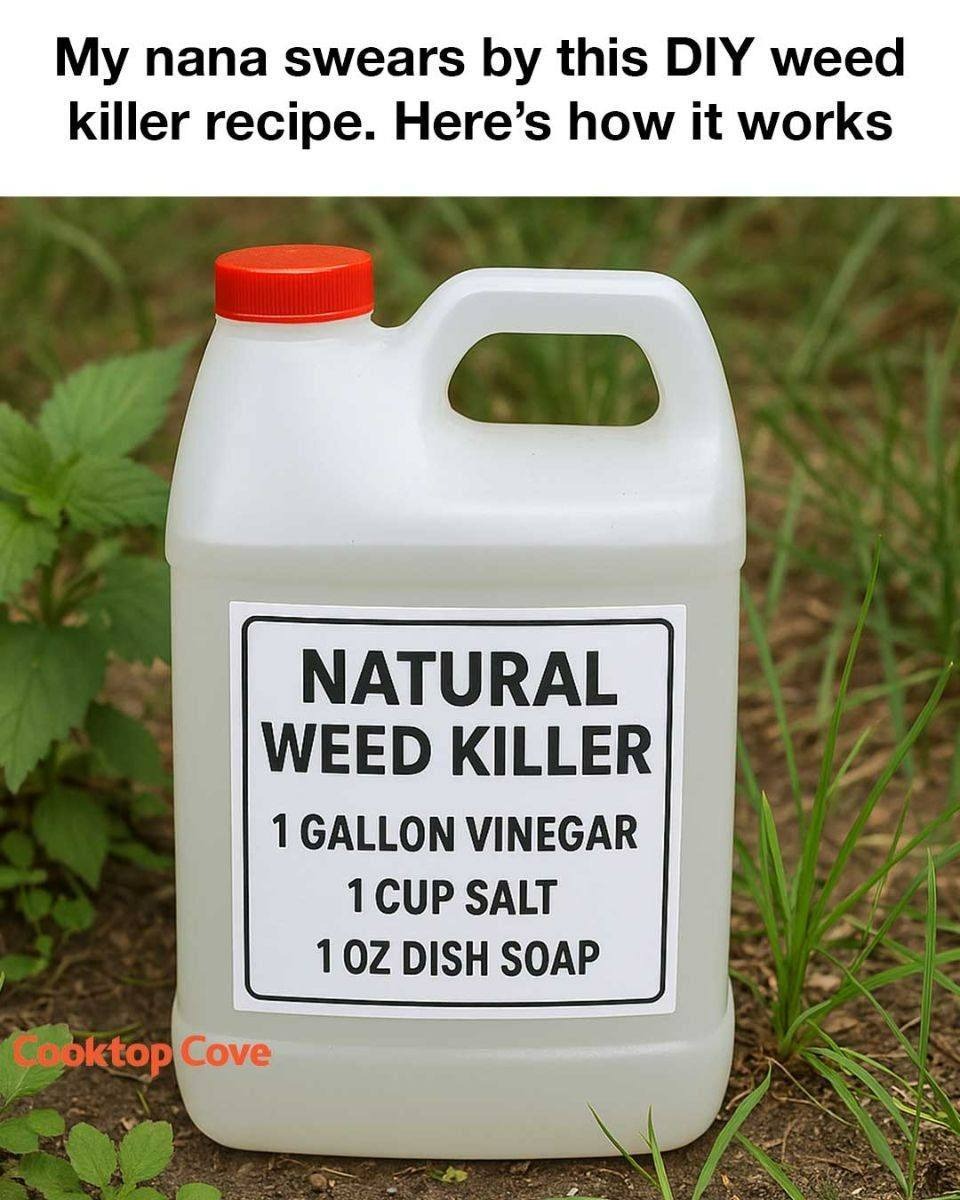
🧰 Nana’s Simple DIY Weed Killer Recipe
Here’s the exact method Nana taught me — and I’ve been using ever since.
What You’ll Need:
1 gallon of white vinegar
1 cup of table salt or Epsom salt
1 tbsp liquid dish soap (unscented preferred)
Instructions:
In a large container, combine vinegar and salt — stir until salt begins to dissolve.
Add dish soap — this helps the solution stick to weeds.
Pour into a spray bottle or garden sprayer .
Spray directly onto unwanted weeds — especially on sunny days for best results.
💡 Pro tip: Apply on a hot, dry day for maximum effect — and avoid spraying desired plants!
🌱 When to Use This DIY Weed Killer
This homemade mix works best on:
Young annual weeds
✅ Most effective — dies within hours
Established perennials
❌ May need multiple applications
Between pavers, cracks, or gravel
✅ Perfect spot — no risk to surrounding plants
Garden beds
⚠️ Use with caution — salt lingers in soil
Indoors or near water sources
❌ Not recommended — use only outdoors
It’s ideal for areas like:
Sidewalk cracks
Driveways
Patios or stone paths
Around sheds or fences
Just remember: this is a non-selective killer — it doesn’t care if it’s a weed or a flower. So always target carefully.
💡 Expert Tips for Best Results
Don’t apply before rain — it washes away the mixture before it can work.
Wear gloves and eye protection — concentrated vinegar can irritate skin and eyes.
Use a handheld sprayer or pump bottle for better control.
Reapply after a week if weeds stubbornly return.
Avoid using on windy days — drift can damage nearby plants.
For extra strength:
Add boiling water to the mix for a hot splash attack.
Or try apple cider vinegar for added acidity and microbial disruption.
🔄 Creative Variations & Upgrades
Want to tweak Nana’s classic recipe? Try these fun and effective upgrades:
Horticultural Vinegar
Stronger than household vinegar — great for tough weeds
Baking Soda
Sprinkle directly on roots for long-term suppression
Boiling Water
Natural alternative — pour directly on weeds between stones
Citrus Peel Oil
Adds extra punch and scent — plus natural degreasing power
Essential Oils
Clove, cinnamon, or citrus oils add potency and fragrance
Try a Citrus-Zap Version with lemon juice and orange oil for extra punch — and a fresh scent!
🛑 What This Weed Killer Won’t Do
While it’s powerful, it’s not a miracle worker.
Limitations to Know:
Doesn’t kill roots completely — may regrow
Not suitable for edible gardens (due to salt content)
Can harm grass and flowers if sprayed on them
Not a pre-emergence herbicide — won’t stop new seeds from sprouting
Not pet-safe immediately after application — let dry first
So think of it as a targeted tool , not a full-scale war strategy.
For Complete Cooking STEPS Please Head On Over To Next Page Or Open button (>) and don’t forget to SHARE with your Facebook friends
ADVERTISEMENT
