
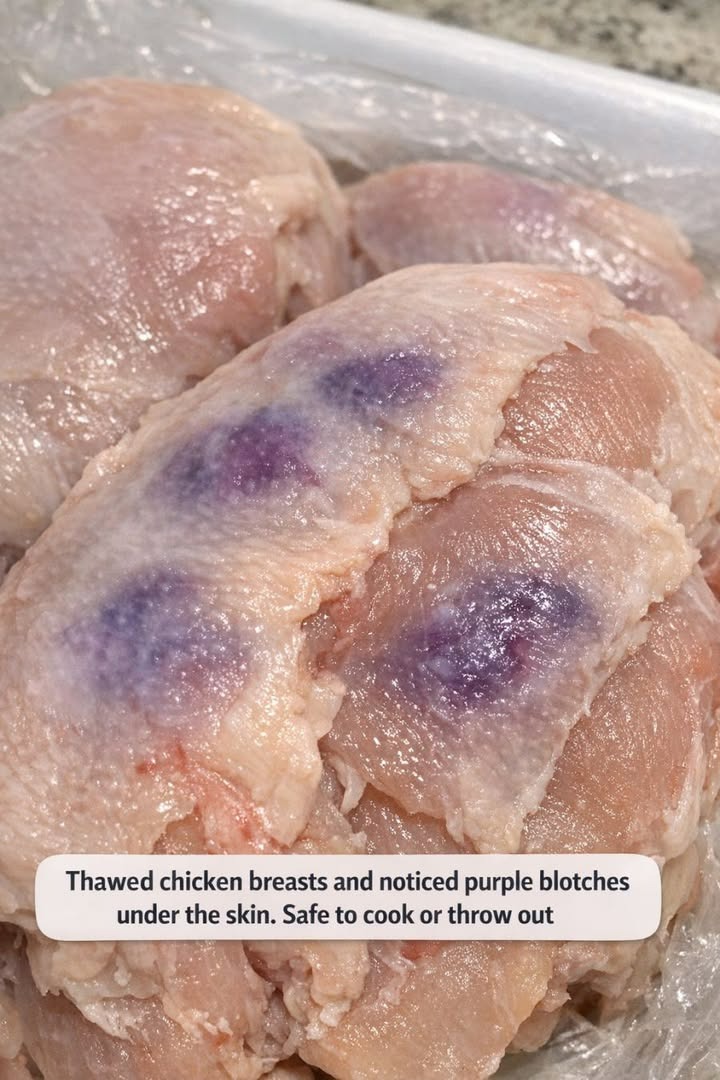
3. Melanosis (Rare, but Natural)
In very rare cases, dark spots can be melanosis—an accumulation of natural pigment cells, similar to a freckle or mole in humans. It’s a benign, non-microbial condition.
What it looks like: Small, concentrated dark spots, sometimes almost black.
Is it safe? YES. It is a natural occurrence and poses no health risk.
The Red Flags: When to Throw It Out Immediately
Color alone is not a reliable indicator of spoilage. You must conduct a full sensory assessment. If you see purple blotches AND encounter any of the following, discard the chicken immediately:
The Smell Test: A definitive, sour, sulfuric, or ammonia-like odor. Fresh chicken has a mild, almost neutral smell. Your nose is your best tool.
The Touch Test: A thick, sticky, or slimy film on the surface, even after rinsing.
The Visual Test: Greyish overall color (not purple spots), significant green tinges, or visible mold.
The Thaw Test: If the chicken was thawed in the refrigerator for more than 2 days, or at room temperature for over 2 hours.
The Safe Handling Protocol: If You Decide to Cook
If your chicken has purple blotches but passes the smell/touch/sight tests, follow this protocol for absolute safety:
Don’t Rinse: Rinsing can spray bacteria across your sink. Pat the chicken dry with paper towels.
Cook to Temperature, Not Color: Use a calibrated digital meat thermometer. Insert it into the thickest part of the breast.
The USDA safe internal temperature is 165°F (74°C). Hold at this temperature for at least 30 seconds.
Pro-Tip for Juiciness: For optimal texture, cook to 160°F (71°C) and let rest for 5 minutes. The carryover heat will bring it to 165°F while keeping it juicier.
Cut and Check: After cooking, cut into the thickest part. All signs of purple/red should be gone, and juices should run clear. If any pink remains or the texture is gelatinous, return it to the heat.
Prevention & Best Practices: Avoiding the Mystery Next Time
Buy Smart: At the store, check the package date and avoid any with torn seals or excessive liquid (purge), which can indicate refreezing.
Freeze Properly at Home: Portion chicken, wrap tightly in plastic wrap or freezer paper, then place in an airtight freezer bag, removing as much air as possible. Label with the date. Use within 9 months for best quality.
For Complete Cooking STEPS Please Head On Over To Next Page Or Open button (>) and don’t forget to SHARE with your Facebook friends
ADVERTISEMENT
