
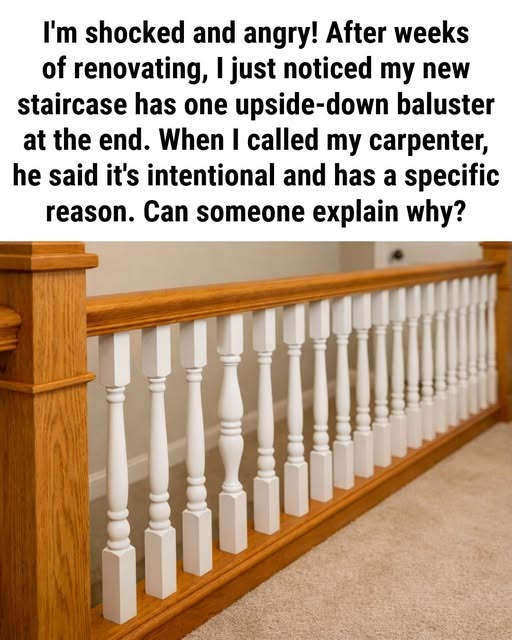
How can you tell the difference?
Likely Intentional Likely a Mistake
Only one baluster is inverted Multiple balusters are randomly oriented
The craftsmanship elsewhere is excellent The overall workmanship is poor
The inversion is subtle—easy to miss It’s obvious and jarring
The house has other signs of intentional imperfection No other unusual details
The home is older, with known craftsmanship traditions New construction with generic details
A Modern Revival
In recent years, some contemporary builders and homeowners have rediscovered this tradition. Including an intentional imperfection—whether an upside-down baluster, a mismatched tile, or a slightly off-center detail—has become a way to:
Honor the craftspeople of the past
Add character and story to a new home
Create a personal “signature” within the build
Embrace the beauty of imperfection in an age of mass production
The Deeper Lesson
The upside-down baluster is more than a architectural curiosity. It’s a reminder that:
Perfection is not the goal – Connection, meaning, and humanity matter more
Flaws can be beautiful – They tell stories, show character, reveal depth
Humility is timeless – Acknowledging our limitations connects us to something larger
Not everything needs an explanation – Some traditions simply are
In a world that often demands perfection—perfect photos, perfect lives, perfect homes—the upside-down baluster whispers a different truth: It’s okay to be imperfect. It’s okay to leave room for mystery. It’s okay to let something be beautiful because of its flaw, not in spite of it.
ADVERTISEMENT
