
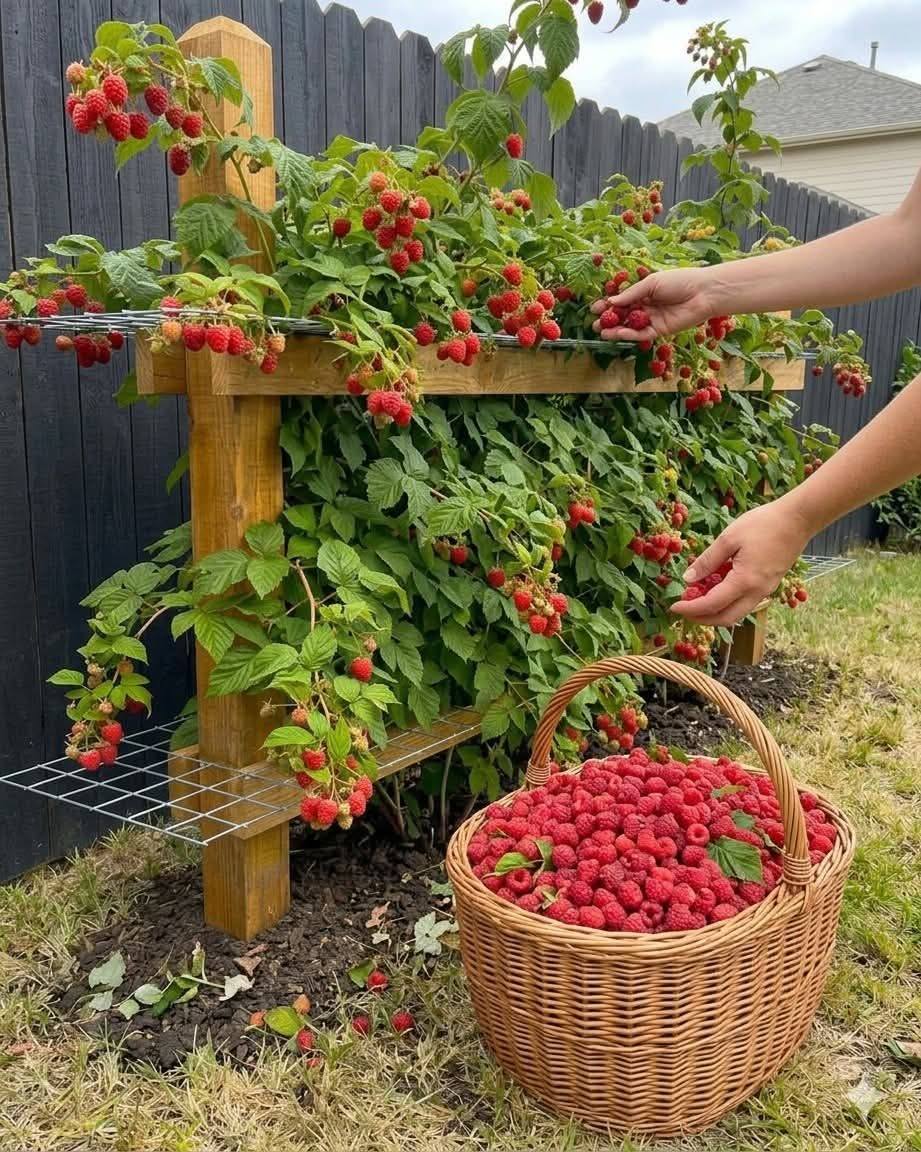
2. Pinch the Tips to Encourage Raspberries Branching
10 Proven Tips Help Gardeners Harvest Buckets of Raspberries
When raspberry canes reach two to three feet tall in spring, pinch or snip off the top inch or so.
This simple act redirects the plant’s energy into producing side branches, those laterals are where most of the fruit will develop later in the season.
It’s especially useful on first-year canes, which will either fruit in fall or set the stage for next summer’s harvest depending on your variety.
3. Mulch Like You Mean It and Add Alfalfa Underneath
For raspberries, I recommend laying down a thin layer of alfalfa pellets or flakes, then topping that with two to three inches of clean straw.
The alfalfa slowly breaks down and feeds your plants, while the straw locks in moisture and keeps the soil cool in summer.
Just be sure to pull the mulch a few inches away from the canes to prevent rot at the base.
Besides, replenish the straw as it compacts or blows away. The difference you’ll see in cane thickness and berry size by mid-season will be worth it.
4. Prune Raspberries the Right Way at the Right Time
10 Proven Tips Help Gardeners Harvest Buckets of Raspberries
If pruning confuses you, you’re not alone, but it’s one of the most important things you can do to increase raspberry production.
For summer-bearing varieties, prune out the old, brown canes that fruited last year right after harvest. Leave the fresh, green canes that’s where next year’s berries will grow.
For fall-bearing or ever-bearing raspberries, you have a choice. If you want one big crop in fall, simply cut all canes down to the ground in late winter.
If you’d rather have two smaller harvests (one in early summer and another in fall), leave the strongest green canes and just tip-prune them in spring.
After that, clean your tools with rubbing alcohol between plants to prevent spreading any fungal spores or viruses.
5. Spray Seaweed Extract During Flowering
10 Proven Tips Help Gardeners Harvest Buckets of Raspberries
When raspberries start to bloom, a little seaweed goes a long way. Liquid kelp is rich in micronutrients and natural growth hormones that help flowers set fruit more efficiently.
You mix one to two tablespoons of liquid seaweed into a gallon of water and spray it directly onto the leaves every two weeks during bloom and early fruiting.
Spray early in the morning or after the sun goes down so the leaves don’t burn. You’ll notice stronger blooms, bigger clusters of berries, and less fruit drop during ripening.
6. Thin the Canes in Spring to Avoid Crowding
It’s tempting to let every cane grow, especially when they all look strong. But overcrowding is a surefire way to reduce your harvest.
Too many canes mean weak, spindly growth and poor airflow, which leads to smaller fruit and more disease.
Each spring, remove any dead, thin, or tangled canes, leaving the six to eight healthiest ones per plant or per linear foot of row.
Make sure there’s space for light and air to reach the center of the patch. A tidy, thinned raspberry row is a productive one.
For Complete Cooking STEPS Please Head On Over To Next Page Or Open button (>) and don’t forget to SHARE with your Facebook friends
ADVERTISEMENT
