
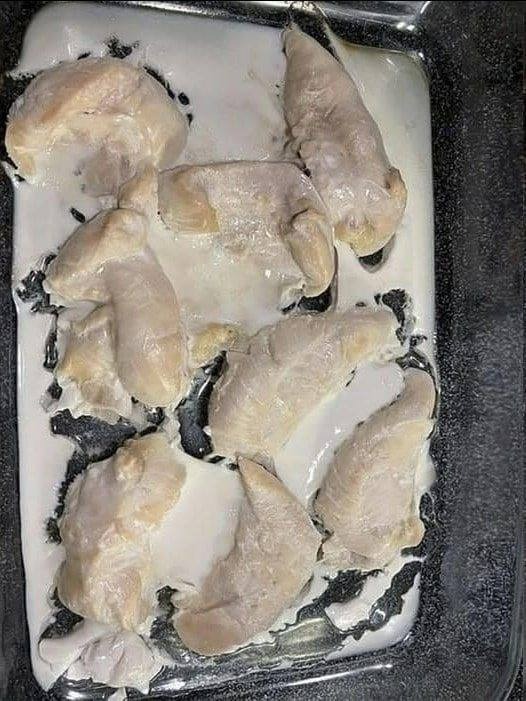
You’re grilling chicken breasts, pan-searing thighs, or roasting a whole bird—and suddenly, you see it:
A cloudy, white, gel-like substance oozing from the meat.
Your stomach drops.
“Is this fat? Pus? Spoilage? Did I buy bad chicken?”
Take a breath.
That “white goo” isn’t a sign of contamination—it’s a completely normal, harmless part of the cooking process.
In fact, it’s science in action—and understanding it can actually help you cook juicier, better chicken.
Let’s demystify what it is, why it happens, and when (if ever) you should be concerned.
🔬 What Exactly Is the White Goo?
It’s not fat. Not pus. Not bacteria.
The white substance is primarily a mixture of:
Water (from the chicken’s natural moisture)
Soluble proteins (mainly myosin and actin)
When chicken heats up, its muscle fibers contract and tighten, squeezing out internal fluids. As those protein-rich juices hit temperatures above 140°F (60°C), the proteins denature and coagulate—turning from clear liquid into a soft, white gel.
🥚 Think of it like egg whites: Raw egg white is clear and runny. Heat it, and it turns opaque and firm. Same principle!
🌡️ Why Does It Happen? (And Can You Prevent It?)
✅ It’s Normal—But Cooking Method Matters
Cooking Method
For Complete Cooking STEPS Please Head On Over To Next Page Or Open button (>) and don’t forget to SHARE with your Facebook friends
ADVERTISEMENT
